What to see in Shanghai
5 stopsUpdated July 2026
In 1990 Pudong was fields. Paddies, warehouses and shipyards, and a local saying that a bed in Puxi beat a flat in Pudong. That year it was decided to turn it into China’s economic shop window, and today there are four skyscrapers there that read as four decades: 1994, 1999, 2008 and 2015. It’s probably the fastest-built piece of city in history.
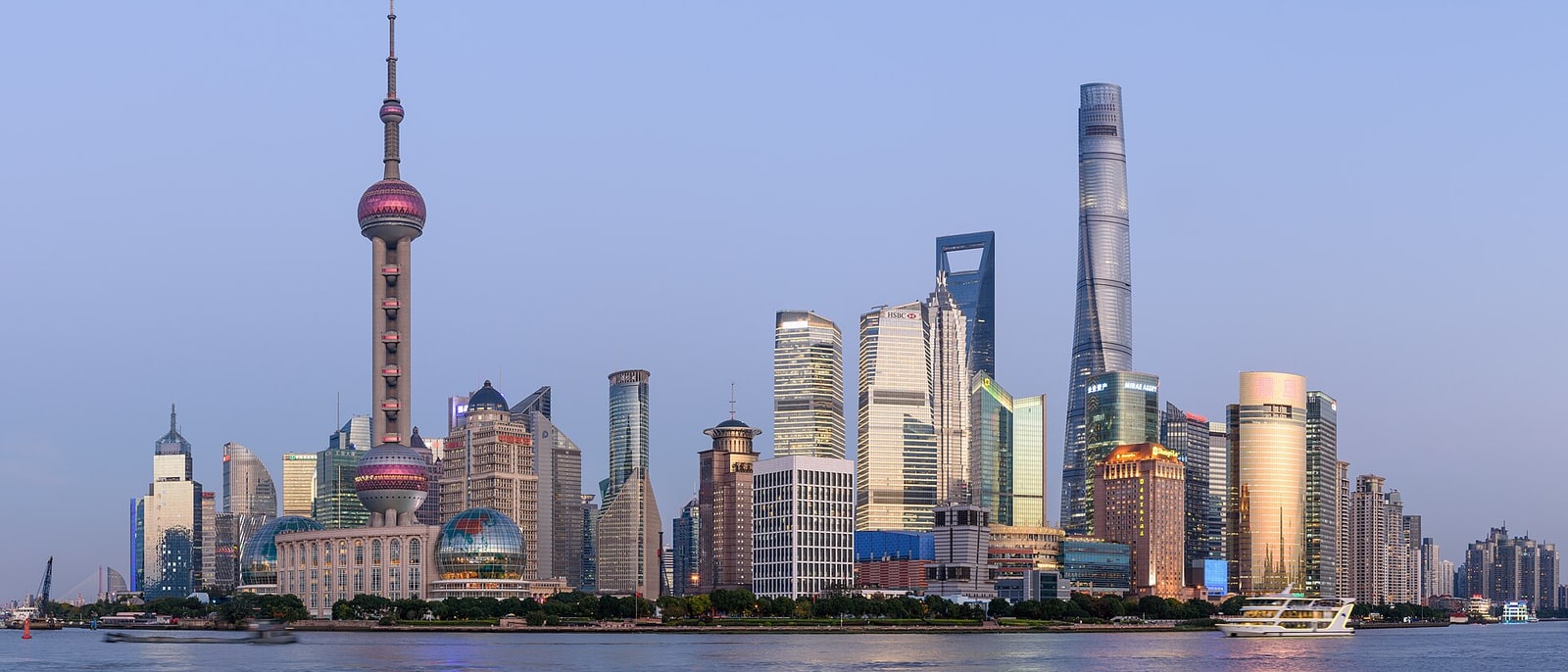
And opposite, across the river, is the reverse: fifty-two buildings from the twenties raised by foreign banks when this city was carved into concessions where Chinese law didn’t apply. Shanghai is that conversation between the two banks, and almost everything worth seeing here is on one or the other, or explains how it got from one to the other.
The route, stop by stop
5 STOPS- 01
The Bund
A kilometre and a half of frontages from the twenties and thirties: banks, trading houses, consulates, all foreign and all built to be seen from the river, because the money came in from the river. The word “bund” isn’t even English or Chinese: it comes from Hindi and means embankment, and it arrived with the British administrators who came from India.
The Bund’s best story is inside the old Hongkong and Shanghai Bank, from 1923: the lobby has a dome with an enormous mosaic depicting the cities of the trading empire. In the fifties, when that symbolism was dangerous, someone at the bank covered it with paint and a false ceiling instead of destroying it. Nobody said anything for forty years.
In the nineties, building works scraped the ceiling and the mosaic turned up intact. You can go in and see it, and it’s free.
- 02
The Shanghai Tower
Six hundred and thirty-two metres and a hundred and twenty-eight floors: the second tallest in the world. And its twisted shape, which looks like an architect’s whim, is pure engineering: by rotating a hundred and twenty degrees from bottom to top, the tower breaks up the wind vortices that form against a flat façade and cuts the load it has to carry by around twenty-four per cent. That means less steel, and less steel is what made it possible on the soft mud of a delta.
It has a double façade, like a thermos, with nine interior gardens between the two skins, and the lift climbs at over twenty metres a second: it reaches the observation deck on floor one hundred and eighteen in under a minute. It’s founded on almost a thousand piles driven eighty-six metres down, because there’s no rock underneath.
Everything in this building is an answer to a problem, and that’s why it’s interesting rather than merely tall.
- 03
Yuyuan Garden
From 1559, built by an official for his father: it took almost twenty years, ruined the family, and the father died shortly after it was finished. It’s a Ming garden in the middle of the old town, surrounded now by towers, with ponds, pavilions and a twelve-metre rockery of yellow stone brought from Lake Tai.
The key to enjoying it is understanding the intent: a Chinese garden doesn’t seek the panoramic view, it avoids it. There are walls, circular doorways, turns and latticed windows placed deliberately so you never see the whole and have to discover it in fragments, so that two hectares feel endless. Every window frames a different scene, like a painting.
It’s the exact opposite of Versailles, and both ideas are from the same period.
- 04
The former French Concession
Between 1849 and 1943 there was a piece of Shanghai governed by France, with its own police, council and laws, where Chinese authority didn’t enter. And next to it was another, the International Settlement, British and American. That anomaly lasted almost a century and explains why this city looks like nowhere else in China.
What’s left of the French Concession is the narrow streets with plane trees forming a tunnel, they planted them, the art deco villas and the atmosphere.
And the shikumen, the housing that came out of mixing the European terraced house with the Chinese courtyard. It’s the most pleasant quarter in Shanghai to walk with no objective, and it’s where you best see that here the two cities didn’t replace each other: they stayed on top of one another.
- 05
The Shanghai Museum
Its collection of ritual bronzes competes with the best in the world: vessels from the Shang and Zhou dynasties, three thousand years old, covered in monsters and figures cast with a sectional clay-mould technique never used in the West. They aren’t decorative objects: they were for ceremonies with the ancestors, and their size signalled the rank of whoever commissioned them.
The building says something too: it’s round on top and square below, which is the traditional Chinese representation of heaven and earth, the same idea as Beijing’s Temple of Heaven. There’s also calligraphy, jade, painting and Ming furniture.
It’s the best way to spend a rainy Sunday in a city where it rains a fair amount.
Frequently asked
Why is the Shanghai Tower twisted?
Physics, not style: the hundred-and-twenty-degree turn breaks up the wind vortices that form against a flat façade and cuts the load by around twenty-four per cent. That means less steel, which is what made it viable on the delta’s soft mud. It’s 632 m and the second tallest in the world.
What were Shanghai’s concessions?
Pieces of the city governed by foreign powers where Chinese law didn’t apply: the French Concession (1849-1943) and the International Settlement, British and American. They lasted almost a century and they explain the Bund, the plane trees, and why this city looks like nowhere else in China.
What’s special about Yuyuan Garden?
That it’s designed so you can’t see it all at once: walls, circular doorways and turns placed deliberately so you discover it in fragments and two hectares feel infinite. It’s from 1559, an official paid for it for his father and it ruined him. It’s the exact opposite of a European garden.