Eating in Shanghai
5 stopsUpdated July 2026
You bite a small hole and drink the soup first. That’s the xiaolongbao technique and it isn’t a guidebook ceremony: there’s broth at steam temperature inside, and anyone who puts a whole one in their mouth genuinely burns their palate and spends the rest of the trip tasting nothing. The soup gets in because the stock is set into jelly, wrapped in the dough, and melts in the steamer.
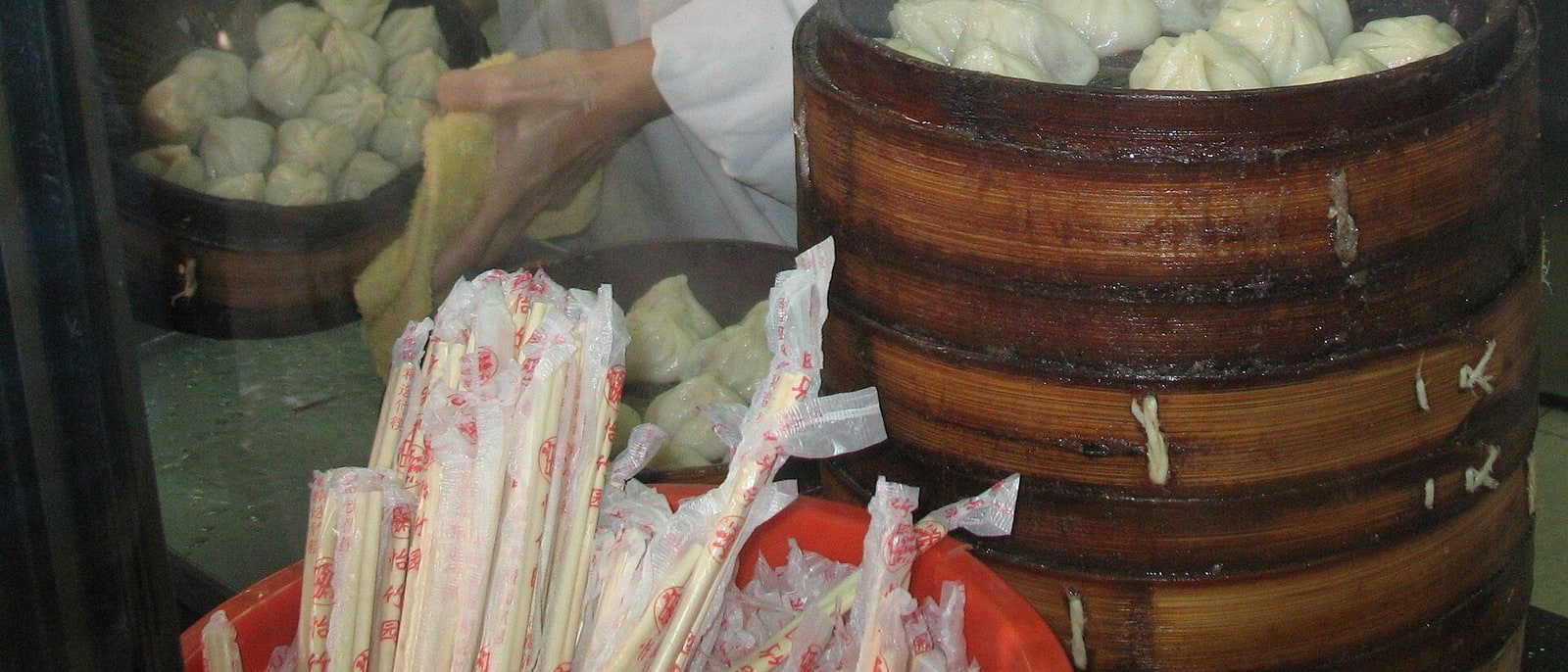
Shanghai’s cooking is the least known Chinese cuisine outside China and it has a trait that surprises people: it’s sweet. Sugar goes into savoury dishes here without any embarrassment, an inheritance of the rich Yangtze delta, and the result is dark glossy braises that resemble neither Canton nor Sichuan. And there’s one season that rules the whole calendar: hairy crab, in autumn.
The route, stop by stop
5 STOPS- 01
The xiaolongbao, and how not to burn yourself
The trick works out simpler and cleverer than it looks: you cook a stock with pork skin until it has so much collagen that it sets into jelly when cold, you dice it, mix it with the minced meat, and wrap it. In the steamer, the jelly melts and the dumpling fills with soup. There’s no syringe and no magic: there’s physics.
The technique for eating it: pick it up by the pleat on top with chopsticks, not from below or it tears, put it on the spoon, bite a small hole in the side, blow, drink the broth, then eat the rest with a little julienned ginger and black vinegar. Put the whole thing in and you burn, and that isn’t a figure of speech: it comes out at steam temperature.
The good ones are known by their pleats: eighteen, made by hand, and the dough so thin the broth shows through.
- 02
The shengjianbao, which is the real one
The xiaolongbao takes the fame, but what Shanghai eats in the morning is the shengjianbao, its rough cousin: thicker leavened dough, pork filling, soup inside too, cooked in an enormous flat covered pan, first fried on the bottom and then steamed with a splash of water. The result has a golden crunchy base and a soft top.
They’re sold in shops that make nothing else, with a metre-wide pan in the doorway and a queue of people on their way to work. They come dusted with sesame and spring onion. The same boiling-broth warning applies and it hurts more here, because the thick dough holds the heat: bite a corner and wait.
It costs a quarter of a restaurant xiaolongbao and for plenty of people here it’s better.
- 03
The hairy crab, and its window
The hairy crab from Yangcheng Lake, an hour from here, is this city’s seasonal obsession and the window is short: October to November, when they mature. Outside those two months there’s no season and what you’re served will be frozen or from somewhere else. The local rule: females are at their peak in the ninth lunar month and males in the tenth, and this is argued about seriously.
It’s eaten steamed, whole, with no sauce: the good part is the roe and the fat, not the meat, of which there’s little. It comes with black vinegar and hot ginger to counteract it, because in traditional medicine crab is “cold”.
It takes half an hour to eat one and there’s an eight-piece tool kit for doing it properly. It’s expensive, it’s awkward, and it’s the thing Shanghai looks forward to most all year.
- 04
Hongshao rou, and the sugar
Shanghai’s cooking has its own name, benbang, and one characteristic that throws people: it’s sweet. Hongshao rou is the example: pork belly cut into cubes and braised long with soy, rice wine and caramelised sugar, until it turns dark, glossy and sticky. It’s this city’s home dish and it was, they say, Mao’s favourite: he was from Hunan and he ordered it here.
The sugar isn’t a whim: it comes from the Yangtze delta having been the richest region in China for centuries, and sugar being expensive, so using it was showing you could. Same with the rice wine and the oil.
The cooking here belongs to people who had money, which is why it’s sweet, fatty and glossy, and why it looks nothing like Beijing’s, which is wheat and frontier.
- 05
Scallion oil noodles
Cong you ban mian: noodles, oil and spring onion. Nothing else. And it’s one of the best dishes in China, on one condition: the spring onion is fried over very low heat for a long half-hour, until it goes almost black and crisp and the oil takes all its flavour. That oil, with a little soy and sugar, is the sauce. The noodles only carry it.
It’s the poor counterpart of a rich cuisine: what people ate when there was nothing, and which turned out better than almost everything. It’s made in any neighbourhood noodle shop and costs small change.
If you try one cheap dish in Shanghai, make it this one, because it proves the only thing that really matters in a kitchen: that time is an ingredient.
Frequently asked
How do you eat a xiaolongbao?
Pick it up by the pleat on top with chopsticks, put it on the spoon, bite a small hole in the side, blow, drink the broth, then eat the rest with julienned ginger and black vinegar. Put the whole thing in and you burn: it comes out at steam temperature. The broth goes in set as jelly and melts as it cooks.
When is hairy crab season?
October and November, when they mature in Yangcheng Lake, an hour from Shanghai. Outside those two months, what you’re sold will be frozen or from elsewhere. It’s eaten steamed and whole, with no sauce: the good part is the roe and the fat, not the meat.
Why is Shanghai food sweet?
Because the Yangtze delta was the richest region in China for centuries and sugar was expensive: using it showed you could. The cooking here, benbang, belongs to people with money, which is why it’s sweet, fatty and glossy. Hongshao rou (pork belly braised with soy, rice wine and sugar) is the example.