Shanghai: practical tips
5 stopsUpdated July 2026
Before you get on the plane, two things need sorting, and both live on your phone. First: here you pay with Alipay or WeChat Pay right down to the stall on the corner, and cash has all but disappeared. Both apps take foreign cards, but verification asks for your passport and takes time, so you do it at home.
Second: many services and apps you use daily aren’t reachable from a local Chinese connection. That includes a good part of what’s on your home screen. It isn’t an unsolvable problem and there are ways to arrive prepared, but discovering it on landing is the worst way. In Shanghai, connectivity isn’t a convenience: it’s the infrastructure of the whole trip.
The route, stop by stop
5 STOPS- 01
Mobile data
It’s worth understanding how this works before travelling, with nobody’s promises attached. From a local Chinese data connection, many services and apps used daily in Europe aren’t reachable. A roaming eSIM works differently: it doesn’t connect you to a Chinese network as a local customer, it routes your traffic through the network of the operator that issued it, which is outside the country. That’s why, in practice, it tends to behave as though you were at home.
We promise nothing about any service’s or operator’s behaviour: check your specific case before leaving.
What is good advice regardless: carry the city map downloaded offline, your hotel’s address in Chinese characters saved in your photos, and the payment apps already set up and verified from home. With that, even if something fails, you aren’t stuck.
- 02
Alipay and WeChat Pay
China skipped the credit card: it went from cash straight to the phone, and today QR payment is the country’s infrastructure. The taxi, the metro, the restaurant, the temple, the fruit stall: everything has its code. A foreigner with neither app is outside the system, literally. Both let you link foreign cards and it works well, but you have to do it before the trip: they ask you to upload your passport, verify your identity and wait. Do it on your sofa with time to spare. By law they have to take cash, and in a hotel or a large restaurant there’ll be no problem, but on the street the issue isn’t refusal: it’s that they can’t change a big note.
- 03
August humidity
Shanghai sits on the Yangtze delta, at sea level and surrounded by water, and in July and August that produces a humidity that throws even people from the Caribbean: it isn’t the degrees, it’s thirty-five with humidity that won’t let sweat evaporate. You come out of the metro and your glasses fog.
On top of that is typhoon season, roughly July to September, which here doesn’t mean disaster but a day of horizontal rain and cancelled flights. The good season is October and November, which is also hairy crab, and spring.
In winter there’s a damp cold that gets into you and, a fact that surprises people, many older buildings in southern China have no central heating because of a historic rule: here you feel that in January.
- 04
The metro and the scanner
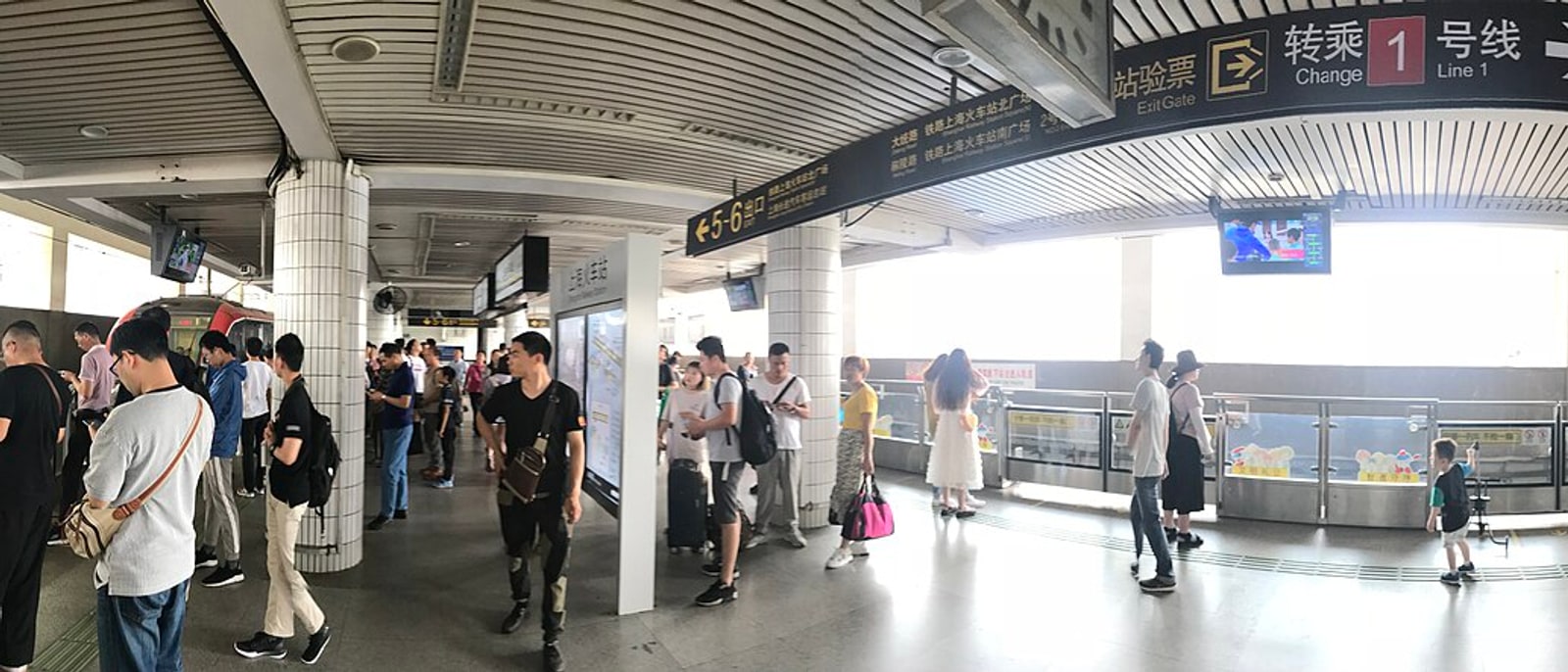
Shanghai’s metro runs more route kilometres than any other in the world, costs small change, is signed in English and reaches both airports and everything else. It’s how you move around this city, no argument: the surface traffic of twenty-five million people is what you’d imagine.
As across China, at every station your bag goes through an X-ray scanner: it isn’t an occasional check, it’s at every entrance every day. Add a couple of minutes per trip. You pay by phone, with the same apps.
And one thing people find out late: the metro shuts early for a city like this, around eleven, so the way back from a long dinner is usually a taxi.
- 05
The address, in Chinese
Carry your hotel’s address written in Chinese characters, saved as a photo on your phone and on paper too in case the phone dies. It isn’t an over-cautious precaution: drivers rarely read the Latin alphabet, and the hotel’s English trading name, which is the one you know, means nothing to anyone. And one recommendation that works all trip: when you leave the hotel, take a card from reception with the address in Chinese and keep it in your wallet. It’s what everyone who travels China a lot does and it solves ninety per cent of the impossible conversations. For the rest, a translation app with the camera works surprisingly well on restaurant menus.
Frequently asked
Does normal internet work in China?
From a local data connection, many services and apps used daily in Europe aren’t reachable. A roaming eSIM routes traffic through its home operator’s network, outside the country, which is why it tends to behave as it does at home. We promise nothing about any service: check your case before leaving and carry maps downloaded.
How do you pay in Shanghai?
By phone: Alipay or WeChat Pay, even at the fruit stall. Cash is barely used and the problem isn’t refusal, it’s that they have no change. Both apps take foreign cards, but set them up before you leave home: verification asks for your passport and takes time.
When is the best time to go to Shanghai?
October and November: good weather and hairy crab season. Spring too. July and August have a delta humidity that throws anyone, with thirty-five degrees in which sweat doesn’t evaporate, and it’s typhoon season on top.