A weekend in Mumbai
20 h route4 stopsBest: November to February. And Sunday morning is not for the dabbawalasUpdated July 2026
Every working day, some five thousand men collect two hundred thousand tins of home-cooked food from houses across Mumbai, carry them by bicycle to a railway station, group them, send them on the commuter trains, regroup them at the destination station and deliver them to an office desk before lunchtime. In the afternoon they do the reverse with the empty tins. They’re called dabbawalas, they’ve been doing it for over a century and their error rate is so low it has been studied in business schools.
The best part is how: there are no computers, no phones and many of them can barely read. They use a code of colours and symbols hand-painted on each tin’s lid, indicating origin station, destination station, building and floor. A logistics system of two hundred thousand daily units running on a paint code. That’s the city you’re about to see in two days: a working machine that solves the impossible without asking permission.
The route, stop by stop
4 STOPS- 01
Saturday: the south, all of it
Only the historic south of Mumbai can be covered on foot, and one Saturday holds all of it: the Gateway of India and the hotel opposite, Kala Ghoda with its galleries, the Victorian ensemble of the High Court and university, CST station and the city museum. All within a two-kilometre radius.
And there’s one stop almost nobody makes that deserves half an hour: Crawford Market, with its nineteenth-century building and reliefs on the façade carved by Rudyard Kipling’s father, who ran the art school here. One more fact from that strange mixture that is Mumbai.
A tip on timing: the south is an office district, so Saturday is far calmer than a weekday, and Sunday is practically empty. If you want to see it with the city at full tilt, go to CST on a weekday at seven in the evening. It’s another thing entirely.
- 02
Saturday night: Bandra
Bandra is halfway between the airport and the south, and it’s where Mumbai goes out at night: restaurants, bars, terraces, shops, and a scene with nothing to do with the solemnity of the historic south. It’s the neighbourhood of the creative class and new money.
And it’s where the film stars live. That has a consequence you have to see to believe: there are specific houses, on the Bandstand seafront, in front of which people gather every day hoping to see someone come out onto the balcony. Some actors have a habit of appearing to wave on notable dates and thousands of people fill the street.
In Mumbai cinema isn’t an industry: it’s a civil religion, and this is its neighbourhood. Coming from the south, the sea bridge is one of the most impressive engineering works in the country and it saves you an hour of jam.
- 03
Sunday morning: the laundry
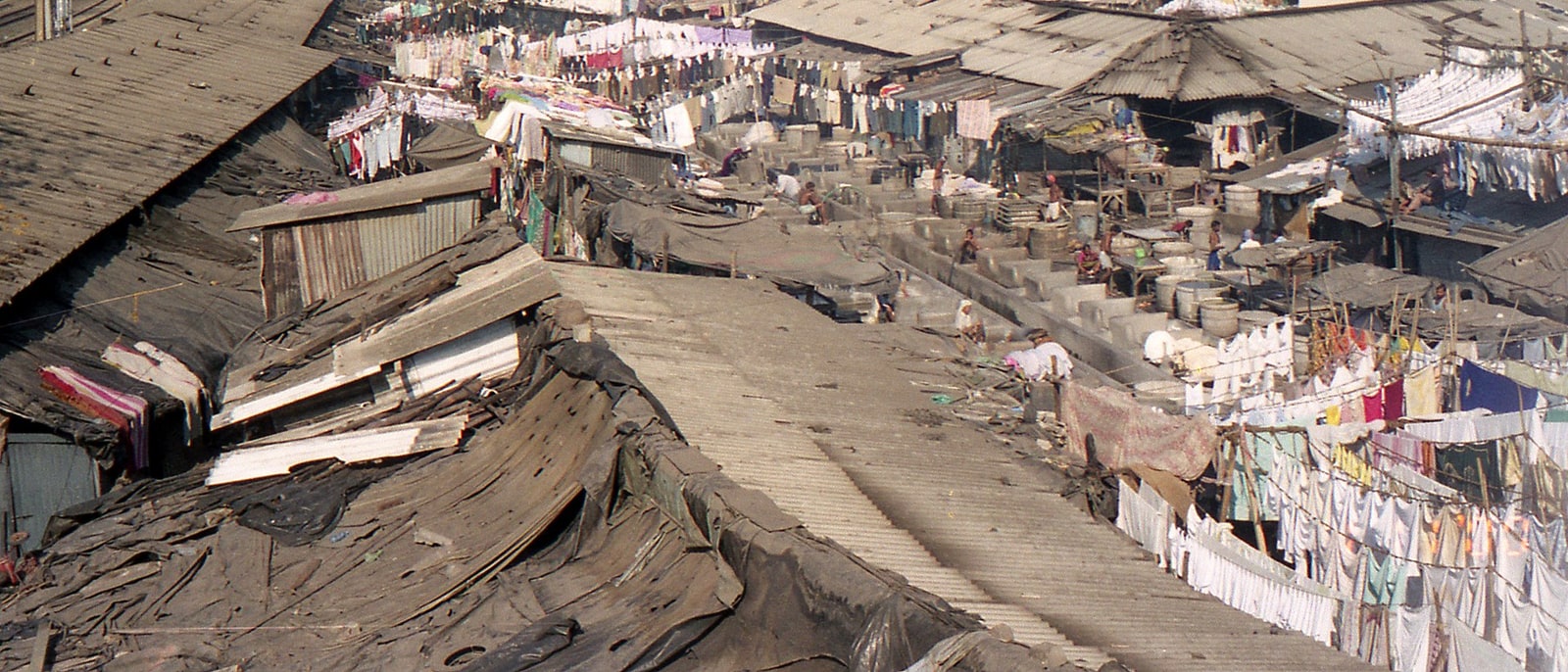
Dhobi Ghat spreads an open-air laundry over several blocks: hundreds of concrete pens in rows, with men beating clothes against the stone, drying lines to the horizon and smoke from the boilers. It has worked since the late nineteenth century and it washes the laundry of hotels, hospitals and half the city.
You see it from a bridge above, which is a spontaneous viewpoint, and from there the image is hard to forget. It’s worth knowing what you’re looking at so as not to turn it into a postcard: this is brutal work, sunrise to sunset with your hands in water, done by a specific community that has been in the trade for generations, and the system works because every garment carries a hand mark that lets it find its owner among tens of thousands.
Look from the bridge, which is the respectful thing, and if you go down into the area with a guide from the community, ask before photographing anyone.
- 04
Sunday: the shrine of the tide
Haji Ali, a white mosque and Sufi shrine, stands on an islet in the Arabian Sea, some five hundred metres offshore, reached on foot along a narrow concrete causeway leaving the promenade. There’s the charm and the trap: that causeway only exists at low tide. When the tide rises, the sea covers it and the shrine is left isolated, floating.
Which means this visit depends on the tide table, and you have to check it before going. Turn up at the wrong hour and you stand on the shore looking.
At low tide, the walk along that causeway, sea on both sides and people coming and going, is the best half hour of the Sunday.
People of every religion go, as at so many Sufi shrines in this country. Enter covered and barefoot, there’s a separate area for women at the tomb, and on Thursday and Friday evenings there’s usually qawwali.
Frequently asked
Who are Mumbai’s dabbawalas?
Some five thousand men who every working day collect two hundred thousand tins of home-cooked food, carry them by bicycle to a station, send them on the commuter trains and deliver them to an office desk before lunch, returning them empty in the afternoon. No computers, no phones: they use a code of colours and symbols hand-painted on the lid. They’ve done it for over a century and their error rate is studied in business schools.
What to do on a weekend in Mumbai?
One day in the historic south, the only part you walk: the Gateway of India, Kala Ghoda, the Victorian Gothic and CST station. The night in Bandra, the film stars’ neighbourhood. And on Sunday, the Dhobi Ghat laundry seen from the bridge and the Haji Ali shrine, reachable only at low tide because the causeway floods. Check the tide table first.