Where to eat in Mumbai
3 h route4 stopsBest: Vada pav coming off work. The Irani café in the morningUpdated July 2026
The bread of Mumbai’s most popular sandwich is called pav, and that word comes straight from the Portuguese pão. The Portuguese held these islands before the British and brought leavened wheat bread, which didn’t exist here. Four hundred years on, they left centuries ago and the bread is still called what they called it. This city’s food is full of fossils like that.
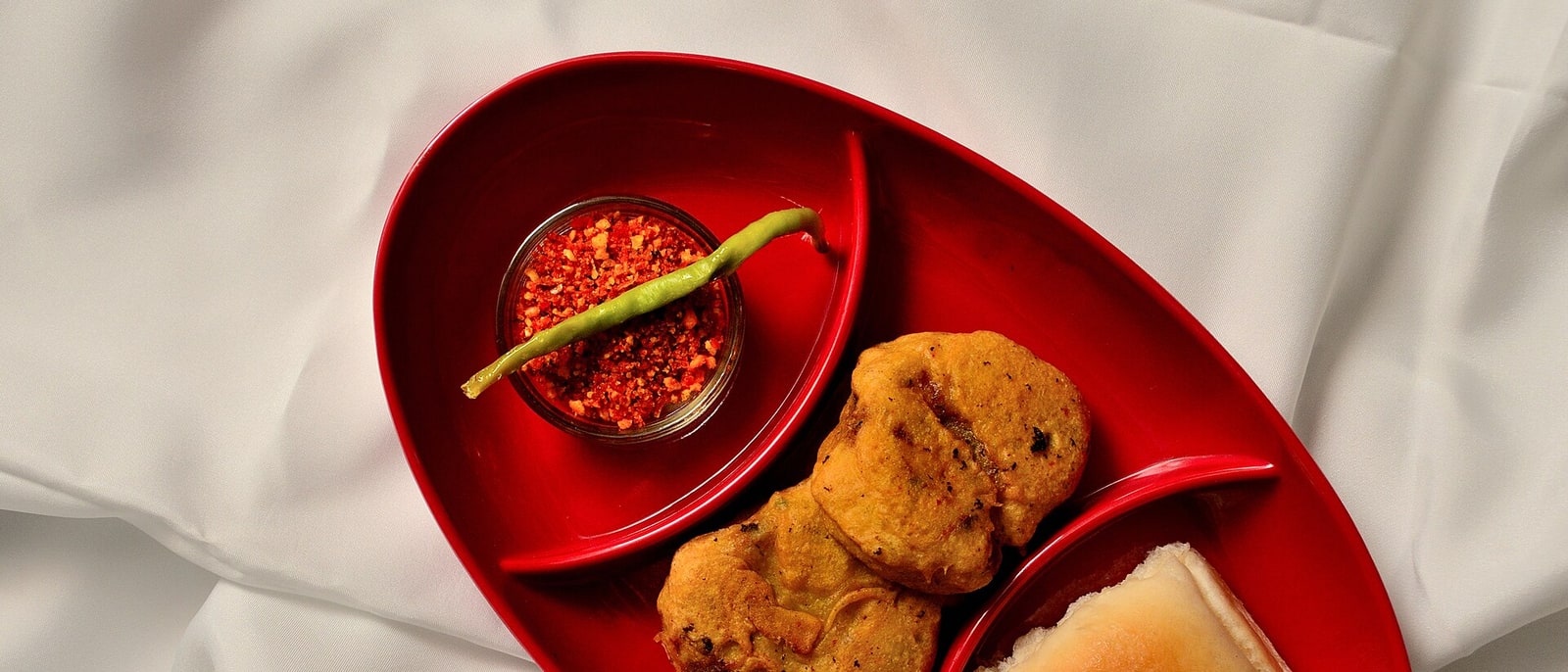
Mumbai eats standing and fast, because it’s a city where time is genuinely money and where millions of people spend three hours a day on a train. Out of that comes a street food culture that’s the best in India and that’s designed to be eaten in five minutes with one hand. And above it are two more layers that exist nowhere else: the Parsis, who arrived fleeing Persia a thousand years ago, and the Irani cafés, which are dying out.
The route, stop by stop
4 STOPS- 01
The vada pav
A ball of spiced potato, coated in chickpea flour and fried, put inside a soft bun with dry garlic chutney. It costs next to nothing, it’s eaten standing in thirty seconds and it’s the food that defines this city. They call it the Mumbai burger and millions are sold every day.
It has a date and place of birth, which is unusual: it was invented in the mid-sixties by a seller with a stall outside a commuter station, thinking precisely of the worker coming off the train who needs to eat something with one hand, hot, cheap and on the move. Which is to say, it’s a dish designed around this city’s trains. That’s all of Mumbai in one bite.
Eat it at a stall with a queue, outside a station or at the hour people come off work, which is when they come out freshly fried.
- 02
The Irani cafés
In the late nineteenth and early twentieth centuries Zoroastrian immigrants from Iran arrived in Mumbai and opened cafés: corner rooms, high ceilings, mirrors, bentwood chairs, chequered floors and hand-written rule boards that are a literary genre in themselves. “no arguing”, “no sitting without ordering”, “no combing hair”. They were the place where the whole city mixed regardless of religion or caste.
There were once hundreds and today a handful remain. They keep closing: the owners age, the children don’t continue and a square metre in Mumbai is worth a fortune. Go into one while they exist, order a bun maska, a roll with butter, and a tea, or the berry pulao if it’s one of the places that makes it, a rice with sour Iranian berries that exists nowhere else in the world. It’s the only visit on this list with an expiry date, and that’s why it’s here.
- 03
Parsi food
The Parsis, Zoroastrians, arrived on India’s west coast fleeing persecution in Persia over a thousand years ago, and they’re one of the most influential communities this city has had, far beyond their size: they founded half of Indian industry, including the company that built the hotel at the Gateway of India.
Their cooking is Persian landed in India, and it resembles nothing you’ve eaten in an Indian restaurant. The flagship dish is dhansak, a dense stew of lentils and pumpkin with meat, sweet-sour and spiced. Patra ni machhi is fish with coconut chutney steamed inside a banana leaf. And they put egg on almost everything.
The community today is small and shrinking, so these restaurants are few and have been open for decades. One of those places, with oilcloth tablecloths and seventy-year-old waiters, is one of the best meals in this city.
- 04
The duck that’s a fish
On menus you’ll see something called Bombay duck, and there’s no duck in it: it’s a fish, the bombil, a gelatinous creature dried in the sun on this coast’s beaches that smells in a way you notice before you see it. It’s eaten fried and crisp and it’s far better than the description suggests. The English name is a colonial misunderstanding that stuck.
That takes you to the oldest layer of food here: the Kolis, the fishing community that lived on these islands long before anyone else arrived and who are still here, with their boats and their docks wedged among skyscrapers. Their cooking is seafood and fish with coconut, kokum and chilli, and it’s the only truly indigenous food of Mumbai. You eat it at the port places and in some Koli restaurants in the north.
Order prawns in coconut curry and fried bombil, and drink something cold, because it burns.
Frequently asked
What do you eat in Mumbai?
Vada pav, the local potato “burger” in a bun, invented in the sixties at a stall outside a station, pav bhaji and bhel puri from street stalls, Parsi food, which is Persian landed in India and resembles no Indian restaurant: order dhansak, Koli fish with coconut, and a bun maska with tea in an Irani café, of which few remain and which keep closing.
What is Bombay duck?
A fish, not a duck: the bombil, a gelatinous creature dried in the sun on this coast’s beaches that smells strongly. It’s eaten fried and crisp and it’s rather better than it sounds. The English name is a colonial misunderstanding that stuck. Order it at a Koli place, alongside prawns in coconut curry.