Mumbai’s neighbourhoods
6 h route4 stopsBest: The south at the weekend. Bandra at night. And dodge rush hourUpdated July 2026
A private house of twenty-seven storeys, with helipads, a cinema and parking for over a hundred cars, planted in the middle of Mumbai: it’s considered the most expensive private residence in the world and one family lives in it. From its windows you see the informal settlements where an enormous share of this city’s population lives. Those two things are in plain view, at once, with no metaphor.
Mumbai is India’s richest city and one of the most expensive pieces of land on the planet, and that inequality isn’t hidden in the outskirts: it’s stacked vertically within the same field of view. Understanding the neighbourhoods here means understanding that, and also understanding the geography: the city is a narrow tongue of land, the south is the historic part and the old money, the north is the new money and the cinema, and in between millions of people move by train.
The route, stop by stop
4 STOPS- 01
Colaba and the south
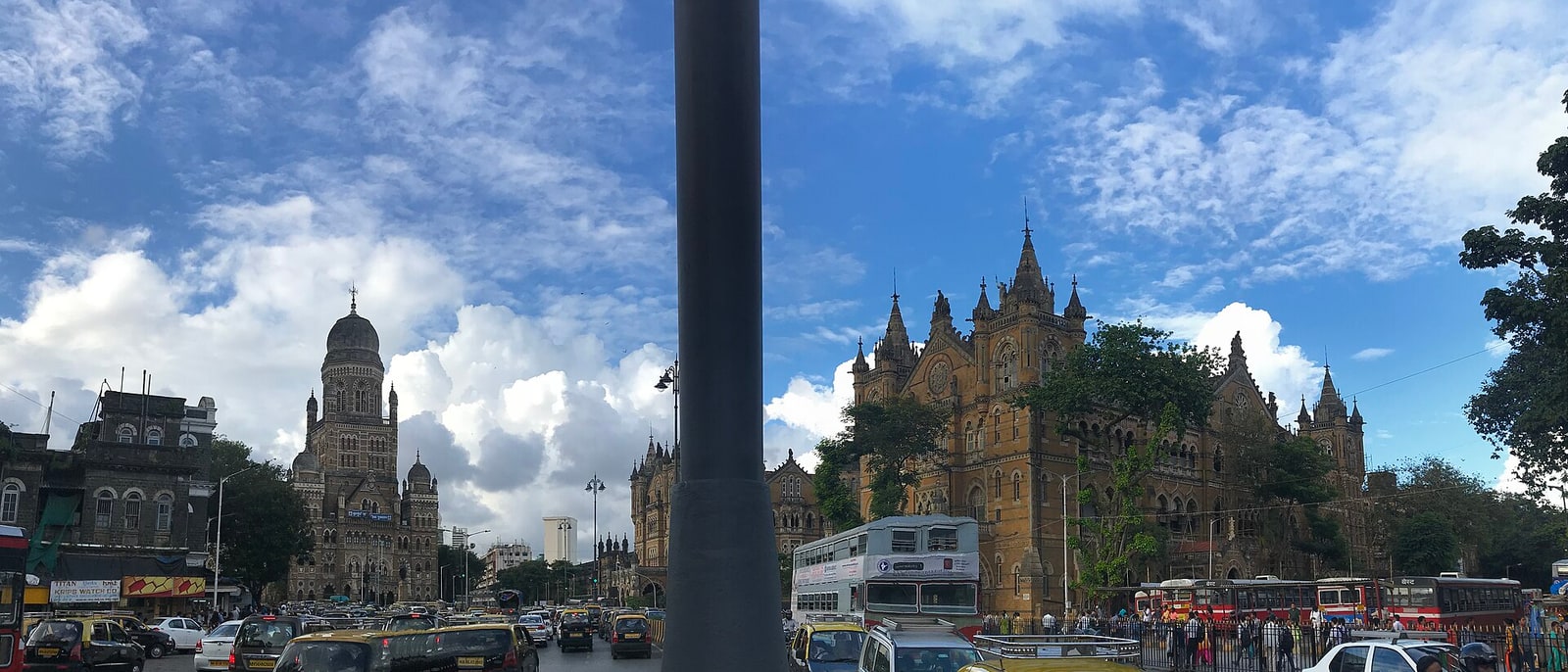
The southern tip of the city, where the port, the Gateway of India, the hotel, the Victorian ensemble and the museums are. It’s colonial Mumbai and the walkable one. Colaba Causeway is the street of shops and stalls, heavily trodden and still fun, and behind it are lanes with old cafés and bookshops.
This is where almost every first-time visitor stays, and it makes sense: everything is walkable, everything is there and it’s the most manageable part of a city that isn’t.
The drawback is the distance to the airport, which is at the other end and a good hour’s drive in ordinary traffic. Bear in mind too that it’s an office and tourism district, so the living neighbourhood city has to be looked for further north.
And here is Sassoon Docks, the Koli fishing wharf, where the catch is auctioned first thing in the morning and where you see the Mumbai that existed before everything else.
- 02
Bandra
Halfway between the airport and the south, Bandra is the neighbourhood where Mumbai eats, goes out and lives: restaurants, bars, shops, tree-lined streets and an energy completely different from the south’s. It’s where the film stars live and where people gather in front of certain seafront houses hoping to see a balcony.
What almost nobody looks at is what lies beneath. Bandra was a fishing village under Portuguese rule, and pieces of it remain: there are lanes of low coloured houses, stone crosses on the corners, a church on top of a hill and Portuguese surnames on the letterboxes.
It’s called Ranwar and it’s a sixteenth-century village wedged between luxury apartment towers.
Walking there for twenty minutes, with the bougainvillea and the quiet, and coming out suddenly onto an avenue with traffic, is one of the strangest and best things you can do in this city. And if you come from the south, cross by the sea bridge.
- 03
Malabar Hill and the towers
The hill of old money, looking over Marine Drive: low houses with gardens and apartment towers with the most expensive views in India. Down below, hidden, is Banganga, a sacred tank of medieval origin surrounded by temples and steps, in silence, in the middle of the city’s priciest district. Almost nobody goes and it’s one of the best stops in Mumbai.
At the top of the hill, inside a private closed wood, are the Parsi community’s towers of silence. Zoroastrians neither bury nor cremate their dead: they leave them on top of these towers, exposed, for the vultures to consume, because they hold that earth and fire must not be polluted.
You can’t enter and there’s nothing to see, but it’s worth knowing because of what came next: in recent decades India’s vultures have collapsed almost to nothing, poisoned by a veterinary drug present in livestock. Without vultures, a thousand-year-old rite stopped working. The community has spent years looking for solutions. It’s an ecological consequence that reached a place nobody would have predicted.
- 04
Dharavi, and the uncomfortable question
Few informal settlements in Asia are bigger than Dharavi: around a million people in a little over two square kilometres, in the geographic middle of Mumbai.
And the first thing to get out of your head is the image of a passive camp: Dharavi is an industrial estate turning over hundreds of millions a year. Inside it are recycling workshops processing a good share of the city’s plastic waste, tanneries, pottery, embroidery and bakeries, with thousands of registered and unregistered businesses.
And now the uncomfortable part, because it’s your decision and not mine. Guided visits are organised, and the ethical debate is real and live: some hold that it turns poverty into spectacle, and some hold, residents included, that it breaks the stigma and shows this is work and not misery.
If you decide to go, two criteria are non-negotiable: that the operator is from the community or verifiably returns profits there, and that photographing people is forbidden. If a tour offers you “authentic photos”, not that one. And if you aren’t sure, don’t go: that’s fine too.
Frequently asked
Where to stay in Mumbai?
Colaba and the south if it’s your first time: everything historic is walkable and it’s the most manageable part, though the airport is a good hour away. Bandra is halfway to the airport, has the best food and the nightlife, and is where the city lives. And the financial district area, if you’re here for work. Take distances seriously: this city is a tongue of land and everything moves south to north.
Should you visit Dharavi?
It’s your decision and the ethical debate is real. Dharavi isn’t a passive camp: it’s an industrial estate with thousands of businesses turning over hundreds of millions a year, with recycling, tanneries and pottery. If you go, two non-negotiable criteria: the operator should be from the community or verifiably return profits there, and photographing people should be forbidden. If a tour offers “authentic photos”, not that one. And if you aren’t sure, don’t go.