From Mumbai airport to the city
1 h route4 stopsBest: The historic south is a good hour. Bandra sits halfwayUpdated July 2026
Only one of the prepaid taxi counters at Mumbai airport is the official one: MIAL’s, the airport operator’s, inside arrivals with the Prepaid Taxi sign. The rest look exactly as official (their counter, their queue, their uniform and their sign) and charge two or three times the real fare. It’s the same pattern as Delhi and it works for the same reason: you’ve just landed and you have nothing to compare against.
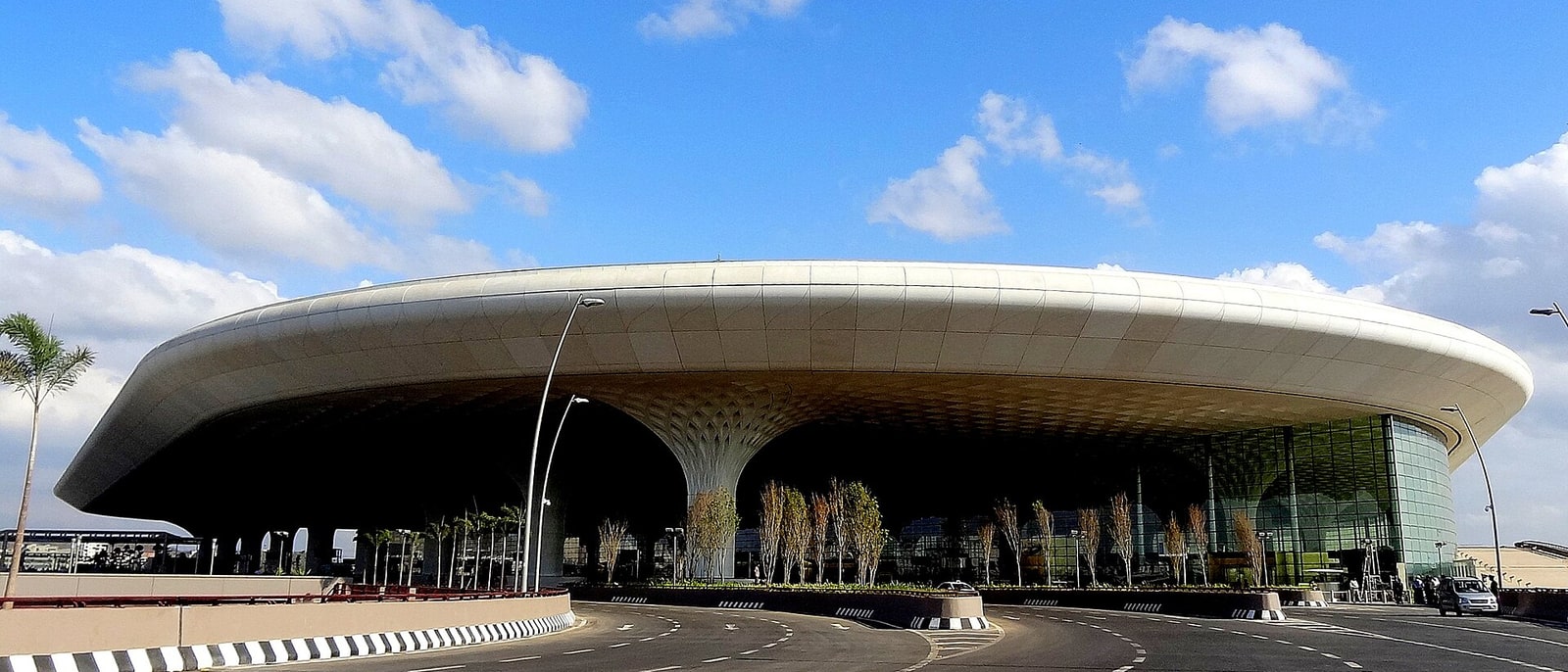
The second thing to know is the geography, because here it decides more than in almost any city: Mumbai is a narrow tongue of land, the airport is in the mid-north and the historic south is at the tip. From one to the other is a good hour’s drive in ordinary traffic, and Mumbai traffic is rarely ordinary. If your hotel is in Bandra, you’re halfway there and that changes the whole calculation.
The route, stop by stop
4 STOPS- 01
The official counter: which one
The system works when you use the right counter: you pay a fixed fare by destination, you’re given a slip, you hand it to the driver and there’s no argument on the way or on arrival. The one you want is MIAL’s, the airport operator’s, inside the arrivals area with the Prepaid Taxi sign.
The others aren’t illegal: they’re private operators positioned nearby, with practically identical styling, charging two or three times. When you pay, check one specific thing that solves nearly every later problem: that the slip carries the driver’s name and the vehicle number. With that, you know which car to get into and you have someone to complain to.
And the golden rule: the driver gets nothing extra, no tolls, no luggage supplement, nothing. It’s all paid at the counter. If he asks, no.
- 02
The new metro
Mumbai has built an underground metro line with a station at the airport, running down towards the financial district and the south of the city. It’s an important novelty in a city where for decades the only way across was the road or the commuter trains, and where the road means a good hour of jam.
The advantage is obvious: it runs underneath, so it skips the traffic entirely, which is Mumbai’s number one problem. An honest tip: this network is recent and has been opening in stages, so before counting on it for your arrival, check the operator’s site for what’s in service and with what hours on the day you travel, especially if you land in the small hours.
If your destination is on its route and the timetable works, it’s the best way in. If not, prepaid counter and patience.
- 03
The apps and the black-and-yellows
Apps work well in Mumbai and have the advantage that the price is fixed before you get in, so no conversation is possible. Use the terminal’s signposted pickup zone, check the number plate and don’t get into another car. If someone phones asking you to cancel and pay him cash, cancel and order another.
And a note that stings a little here: the traditional black-and-yellow taxis, the Premier Padminis, those rounded sixties Italian-designed cars that were this city’s symbol as much as the Gateway of India, were finally retired in 2023 for age. Not one remains in service. Black-and-yellow taxis still exist, but they’re modern cars. If you’ve seen a Mumbai film and expected to ride in one of those, you’re a couple of years late.
- 04
The hour, which decides everything
What will shape your arrival most isn’t what you take, it’s what time and where to. From the airport to the historic south (Colaba, the Gateway of India) is a good hour in ordinary traffic, and at rush hour that figure goes wherever it likes. Bandra is halfway and takes considerably less.
That fact should influence where you book, not just how you arrive. If your trip is short, or if you arrive and leave on awkward flights, consider Bandra instead of the south: you save two good hours in a car overall, and besides it’s the neighbourhood where the city eats and goes out. If you choose the south, which is perfectly reasonable because it’s where everything historic is and it all walks, accept the transfer and don’t do it at seven in the evening.
Landing in the small hours, incidentally, has an odd advantage in this city: it’s the only time that trip is quick.
Frequently asked
How do you get from Mumbai airport to the city?
With the OFFICIAL prepaid counter, MIAL’s, inside arrivals with the Prepaid Taxi sign: there are other counters that look just as official and charge two or three times. Check the slip has the driver’s name and vehicle number, and give him nothing extra. There’s also an underground metro line with an airport station running to the financial district and the south: check the operator’s site for which sections and hours are in service, as it’s recent.
How long from Mumbai airport to Colaba?
A good hour in ordinary traffic, and at rush hour whatever it likes. Mumbai is a narrow tongue of land, the airport is in the mid-north and the historic south is at the tip. Bandra sits halfway and takes considerably less: if your trip is short or your flights are at awkward hours, consider sleeping there and save two hours in a car overall.