Rome: practical tips
5 stopsUpdated July 2026
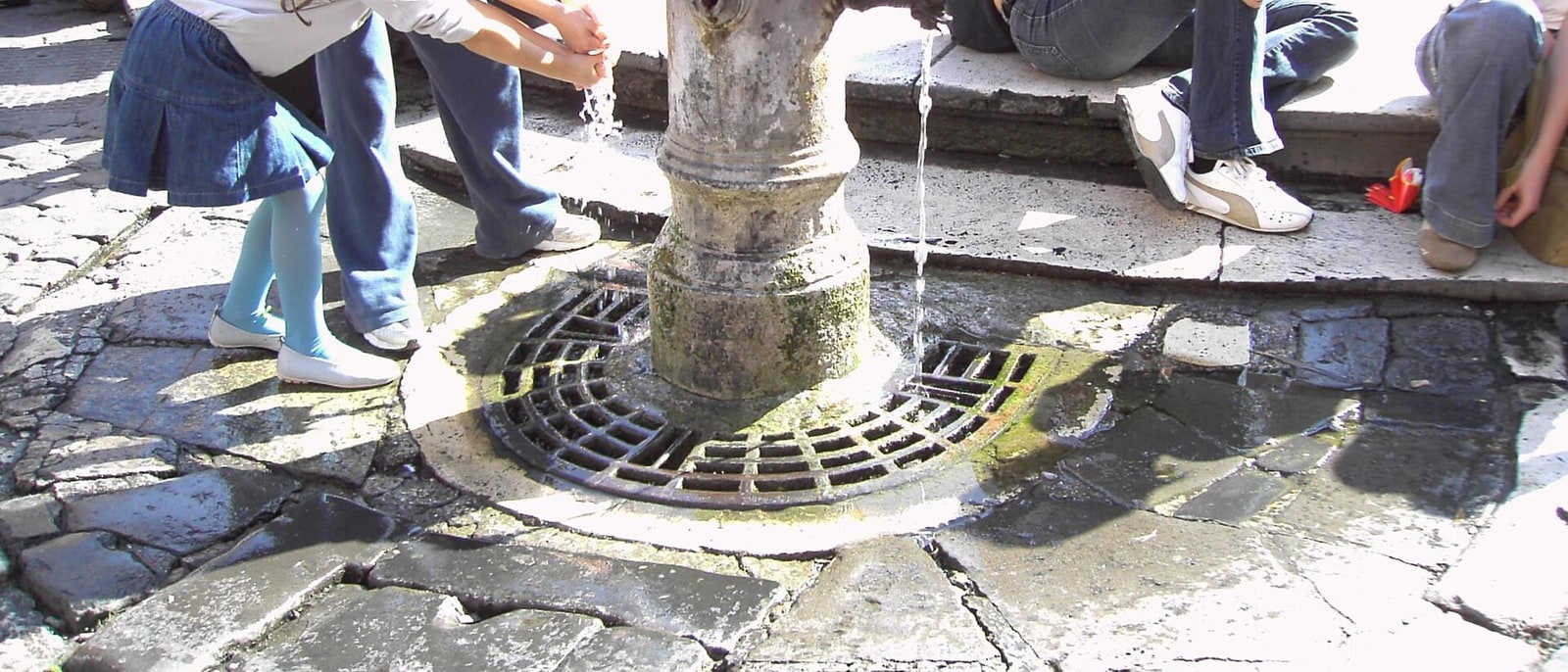
There are two and a half thousand free drinking fountains spread across the streets of Rome. They’re called nasoni after the shape of the spout, they’ve run without stopping for over a century, and the water is the same water that reaches the hotels, with some of them fed by Roman aqueducts still in service. Fill your bottle and don’t buy water in the centre: it’s the best advice on this page and it costs nothing.
The rest is calendar and rules. In August the Romans leave and half the city shuts, the good neighbourhood trattorias included. There are municipal rules that surprise people and that are genuinely fined. And there’s a handful of scams that have worked for decades in the same four places, always the same ones.
The route, stop by stop
5 STOPS- 01
The nasoni
About two and a half thousand cast-iron spouts, curved like a nose, hence the name, dribble non-stop across the city since 1874. They’re never deliberately turned off: the water runs so it doesn’t stagnate and it goes into the sewers, and that apparent absurdity is what guarantees it’s always drinkable.
The trick to know: put a finger over the hole at the end of the spout and the water comes out of a small hole on top, in an arc, so you can drink without bending down. It’s designed that way. Some nasoni are still fed by two-thousand-year-old Roman aqueducts, including the Aqua Virgo that supplies the Trevi Fountain.
Filling your bottle here in August is the difference between enjoying Rome and enduring it.
- 02
August: Rome leaves Rome
In August the Romans go to the coast and the city is left to visitors. Around the 15th, ferragosto, the shutdown is wholesale: neighbourhood trattorias pull the shutter down for two or three whole weeks and hang up a handwritten sign. The places that stay open are, precisely, the ones that live off the tourist passing once.
Add that it’s the hottest month, that the ruins have no shade, and that the Forum at midday in August is a slab of stone at forty degrees.
If you can choose, come April to June or in October. If you can’t, two rules: do the outdoor things from eight to eleven in the morning and find museums and churches for the middle of the day, which are also cool.
- 03
The rules that get fined
Rome has a handful of municipal rules that surprise people and that are genuinely enforced, with fines. The most famous: you can’t sit on the Spanish Steps since 2019, and there are officers with whistles enforcing it. The reason is that the 1725 marble was being worn down by the traffic of people eating on it.
There are more: you can’t put your feet in the monumental fountains, not Trevi and not the ones in Navona, you can’t eat sitting on steps or monuments, and you can’t drink alcohol on the street after a certain hour in some areas. None of this is a trap: it’s signposted and you’re warned.
And if at any point a gladiator approaches offering himself for a photo, be clear that the photo isn’t free and that you don’t set the price.
- 04
The cobbles
Rome’s black cobbles are called sampietrini, they’re basalt cubes about twelve centimetres across laid by hand one at a time, and they’ve been made the same way since the sixteenth century. They’re beautiful, they’re part of the city, and they’re the worst urban paving in Europe to walk on: uneven, slippery in rain, with joints that eat heels.
Since in Rome you walk five or six kilometres a day without noticing, the centre has no metro, footwear isn’t a style detail, it’s infrastructure. Flat shoes with a thick sole, and nothing brand new.
And if it rains, be careful: basalt polished by four centuries of footsteps is like ice, and here that isn’t a figure of speech.
- 05
Mobile data
In Rome your phone does two jobs. One is the map, and it matters more than in other cities: the centre is a medieval maze with no grid, no metro underneath and streets that change name every fifty metres, so navigating by eye doesn’t work. The other is booking: the Sistine, the Colosseum and the Borghese Gallery are timed tickets and they sell out.
Coverage is good across the city and on the metro, and at Fiumicino too.
An eSIM activates before you leave home and works on landing, which here covers the first thing you’ll do: check whether your train into town is the Express or the FL1, and which station each one leaves you at. Which, as you now know, isn’t the same one.
Frequently asked
Can you drink the water from Rome’s fountains?
Yes. The nasoni, those two and a half thousand curved iron spouts dribbling all over the city, give free drinking water and it’s the same water that reaches the hotels. Put a finger over the hole at the end and a jet comes out on top so you can drink without bending. Some are fed by Roman aqueducts still in service.
Is August a good time for Rome?
It’s the worst. The Romans leave, and around the 15th, ferragosto, the neighbourhood trattorias shut for two or three weeks, so only what’s built for tourists is left. It’s also the hottest month and the ruins have no shade. If you can, come April to June or in October.
Is it true you can’t sit on the Spanish Steps?
Yes, since 2019, and it’s fined: there are officers enforcing it. The reason is that the 1725 marble was wearing away. You also can’t put your feet in the monumental fountains or eat sitting on monuments. It’s signposted and it isn’t a trap.