Where to eat in Rome
5 stopsUpdated July 2026
Four pastas, and all four come out of the same very short pantry: guanciale, pecorino and black pepper. Cacio e pepe is cheese and pepper. Gricia adds the guanciale. Amatriciana adds tomato to gricia. And carbonara adds egg. Change one ingredient and you have a different dish with a different name: it’s a family tree, not a menu.
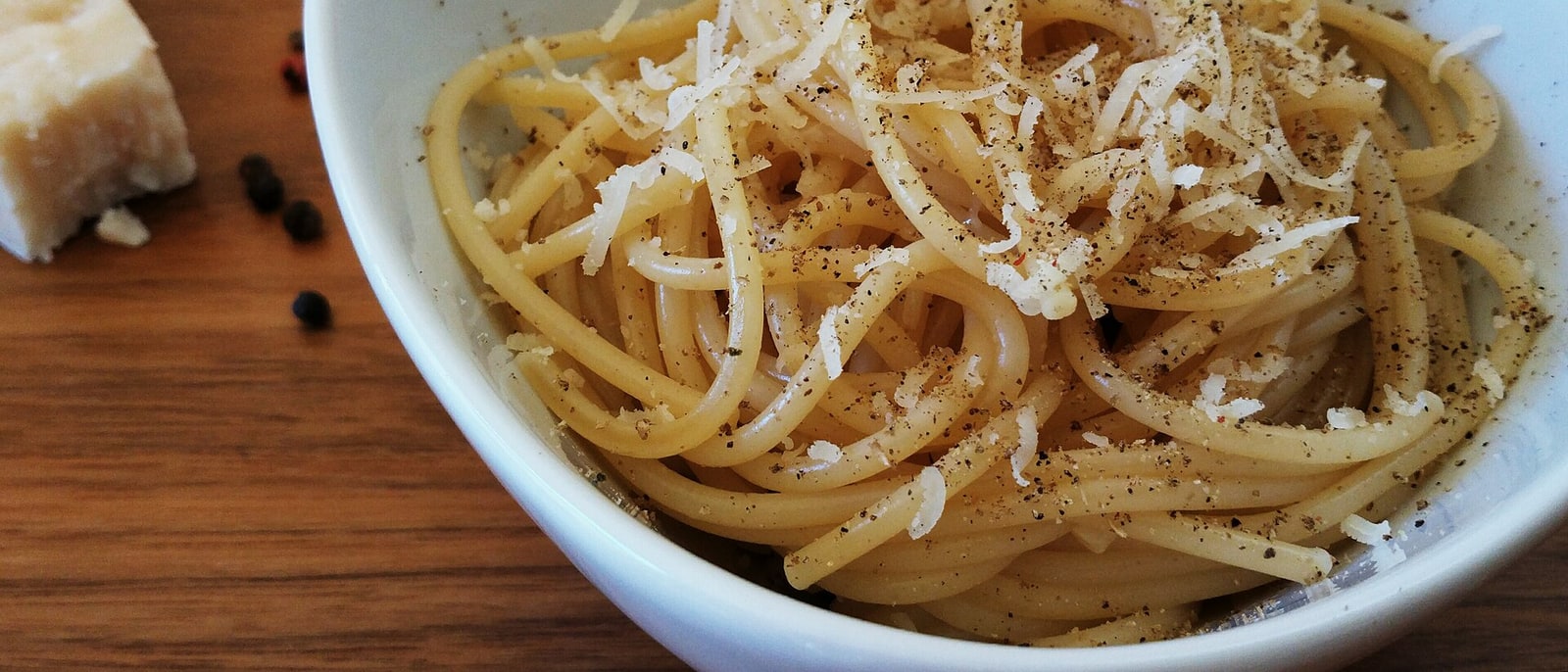
That poverty isn’t accidental: it’s the cooking of shepherds and slaughtermen, people who had what they had. And the rule that governs everything else runs the same way: if a place has a menu in six languages, photos of the dishes by the door and a man inviting you in, it isn’t for you. The good ones make four things and they’re two streets beyond where you’re looking.
The route, stop by stop
5 STOPS- 01
The four pastas
Cacio e pepe: pecorino romano, black pepper and pasta water, emulsified until they bind. Three ingredients and it’s the hardest of the four, because if the cheese gets too hot it splits and you get glue. Gricia adds guanciale. Amatriciana adds tomato to gricia. Carbonara swaps the tomato for egg.
And the precisions that here aren’t fussiness but identity. Guanciale is cured pork cheek, not pancetta: it’s fattier and sweeter, and that rendered fat is half the recipe. Pecorino is sheep’s cheese and it’s saltier and sharper than parmesan, which is cow’s and from another region.
And carbonara has no cream: it has egg, and the creaminess comes from setting the yolk with the pasta’s heat without turning it into an omelette. Anyone adding cream is covering up not knowing how.
- 02
Testaccio and the quinto quarto
Testaccio lived off Rome’s slaughterhouse, and its cooking comes from that with brutal logic: the animal was divided into four quarters that went to the nobles, the clergy, the bourgeoisie and the military, and what was left (the fifth quarter, which doesn’t exist) went home with the slaughtermen as part of their wages. Offal, organs, tail.
Out of that necessity came dishes that are now high Roman cooking: coda alla vaccinara, oxtail stewed three hours with celery and cocoa, trippa alla romana, pajata. They’re the food of people who couldn’t choose and who cooked better than anyone for exactly that reason. You eat here for half what the centre charges, in trattorias with no translated menu.
If offal puts you off, order a carbonara anyway: they do that better here too.
- 03
The Ghetto and the artichokes
Jews have lived in Rome since the second century BC (that is, from before the Empire existed) and it’s the Jewish community with the longest continuous presence in Europe. The ghetto was created in 1555, walled shut, and not abolished until 1870: three centuries locked into four blocks by the river, in the most flood-prone part of the city.
Out of that closed-in cooking came the carciofo alla giudia: the whole artichoke, flattened and fried twice until the leaves open like a flower and go crisp as a crisp. It’s seasonal, autumn to spring, and outside that don’t order it.
The quarter walks in twenty minutes, has the great synagogue, and gold plaques set into the pavement outside doorways with the names of the people taken from them in 1943. They’re called Stolpersteine and they’re worth looking at.
- 04
Coffee, standing up
In Italy coffee has two prices and both are legal: al banco, standing at the bar, and al tavolo, sitting down. The difference can be double or triple, and it has to be posted on a sign by law. It isn’t a tourist scam: it’s the rule, and it applies to the Roman next to you too. If you sit on a terrace in Navona, you’re paying rent on the square.
The local ritual is standing, thirty seconds, an espresso in one go, out.
And the unwritten rules: cappuccino is a morning thing and ordering it after lunch earns you a look, though they’ll serve it without arguing. A caffè, plain, is an espresso. There’s no ordering “a coffee” and expecting something else. And the bar price in an ordinary café has been about the same for years.
- 05
The supplì, and don’t call it an arancino
The supplì, the Roman rice croquette: oblong, breadcrumbed, fried, with a block of mozzarella inside that strings when you break it. Hence the full name, supplì al telefono, because the cheese string looks like an old telephone cord. You eat it standing, with your hand, on the way somewhere else, and it costs what it costs.
And it isn’t an arancino: the arancino is Sicilian, round or conical, bigger, and made with ragù or saffron. Confusing them in Rome is like confusing two cities, and you will be corrected.
Where you buy it is a pizza al taglio, the tray pizza cut by weight with scissors: you point at the piece, they weigh it, you pay by the gram. It’s the everyday Roman lunch and it appears in no guidebook.
Frequently asked
Does carbonara have cream in it?
No, never. It has egg, guanciale, pecorino and black pepper: the creaminess comes from setting the yolk with the pasta’s heat. If a Roman menu offers it with cream, that’s your cue to leave. And it’s guanciale, cured pork cheek, not pancetta, and sheep’s pecorino, not parmesan.
What are the classic Roman pastas?
Four, and they’re a family tree: cacio e pepe (pecorino and pepper), gricia (adds guanciale), amatriciana (adds tomato to gricia) and carbonara (adds egg). All from the same very short pantry, because it’s the cooking of shepherds and slaughtermen.
Why does coffee cost more if you sit down in Italy?
Because there are two legal prices: al banco (standing at the bar) and al tavolo (seated), and the difference must be posted on a sign by law. It isn’t a tourist scam: it applies to the Italian next to you too. Standing can cost half or less.