A weekend in Rome
20 h route4 stopsBest: Avoid August: half the neighbourhood trattorias shutUpdated July 2026
The Vatican is another country, and that sentence, which sounds like a pub-quiz fact, is what organises your weekend: it’s a sovereign state of under half a square kilometre with its own stamps, its own guard and its own queues, and crossing into it is a day, not a stop. So the split makes itself: one day on this bank and one on the other.
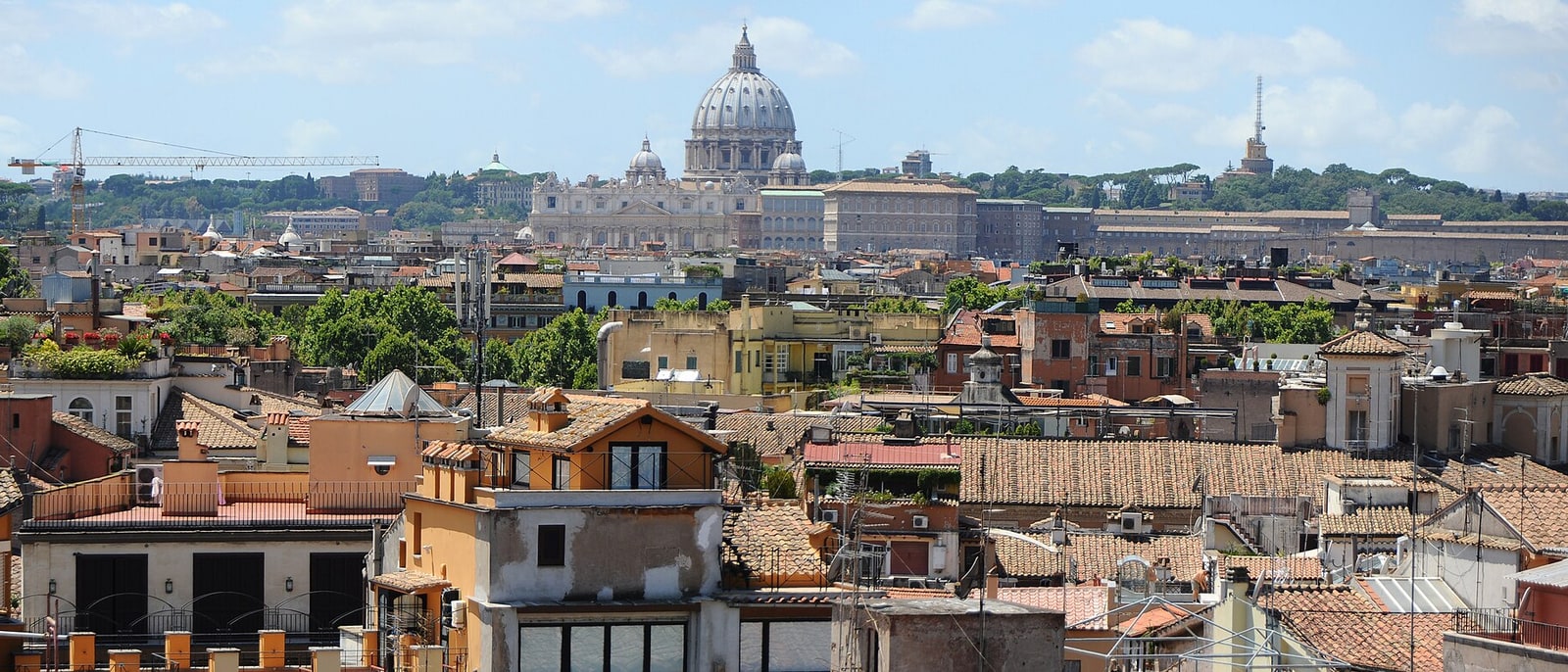
What is worth booking ahead is the Sistine Chapel, because arriving without a time slot means hours of queue in the sun. And the advice that actually changes the weekend isn’t that one: it’s that the second night should be dinner in Testaccio rather than the centre. That’s where the real Roman food is, and where Europe’s most interesting rubbish heap is.
The route, stop by stop
4 STOPS- 01
Saturday: ancient Rome
Day one follows the line that doesn’t cross the river: Colosseum and Forum early, Pantheon at midday, Navona and Trevi in the afternoon. It’s about four kilometres of walking in total and it goes at an easy pace, on the single condition that you start at half eight at the Colosseum.
One note that saves money and grief: Rome has around two and a half thousand public drinking fountains, the nasoni, those curved iron spouts dribbling away on street corners all over town. The water is the same water that reaches your hotel and it’s good.
Put a finger over the hole underneath and a jet comes out of a small hole on top, so you can drink without bending down. Fill your bottle and don’t buy water anywhere in the centre.
- 02
Saturday night: Testaccio and the mountain of amphorae
In Testaccio there’s a thirty-five-metre hill that isn’t a hill: it’s a tip. For three centuries olive oil arrived in Rome in clay amphorae that couldn’t be reused because the oil turned them rancid, so they were broken up in an orderly way and stacked here. It’s reckoned there are fifty-three million amphorae in it. It’s the only mountain in the world made entirely of sorted rubbish, and it has been there eighteen hundred years.
The neighbourhood around it was the slaughterhouse district, and that’s where its cooking comes from: the quinto quarto, the fifth quarter, which is what the slaughtermen took home as part of their wages once the gentry had taken the four good quarters.
Offal, in one word. You eat better here and for half what the centre charges, and the trattorias don’t have menus in six languages.
- 03
Sunday: the Vatican Museums
The route runs seven kilometres and almost everyone does it wrong: they go in thinking about the Sistine Chapel and force-march through twenty rooms that on their own would be any country’s national museum. The map gallery alone is a hundred and twenty metres of sixteenth-century cartography painted on the walls.
Two practical points. Book a time, because without one the queue goes round the wall. And inside the Sistine you can’t talk or take photographs, and it’s enforced: a guard shouts “silenzio” every few minutes and has done for decades.
Look up and find the two hands that don’t touch, which are smaller than you think and sit in the middle of a ceiling with three hundred figures. Then sit on the side bench for five minutes, which is where you actually see it.
- 04
Sunday: St Peter’s and the dome
The basilica costs nothing to enter and is the largest church in the world, with a trick of scale you need to know about to see: it looks smaller than it is because everything is enlarged in proportion. The cherubs holding the holy water stoups, which from the door look like children, are nearly two metres tall. Set into the nave floor are markers naming the world’s other cathedrals and how far they would reach.
You can climb the dome, and it’s worth it for the strangeness of it: the last stretches run between the dome’s two shells and the walls lean with you, so you end up walking at an angle. At the top is the best view in Rome.
The dress code is enforced at the door and isn’t negotiable: shoulders and knees covered, men and women. Come dressed from your hotel.
Frequently asked
How many days do you need for Rome?
Two, minimum, for a specific reason: the Vatican is another country and it takes a full day between museums, Sistine Chapel and St Peter’s. With two days, one is ancient Rome (Colosseum, Forum, Pantheon) and one is the Vatican.
What is Monte Testaccio?
A thirty-five-metre hill made entirely of broken oil amphorae: around fifty-three million of them. The oil turned the clay rancid so they couldn’t be reused, so for three centuries they were broken up and stacked here in an orderly way. It’s the only mountain in the world made of sorted rubbish.
Do you pay to enter St Peter’s Basilica?
No, entry is free, you only pay to climb the dome. There is a dress code and it’s checked at the door: shoulders and knees covered, men and women. The Vatican Museums and the Sistine Chapel are ticketed, and it’s worth booking a time.