OZU /MEXICO /MEXICO CITY /GUIDE
Eating and drinking in Mexico City
3 h route4 stopsBest: Chiles en nogada, July to SeptemberUpdated July 2026
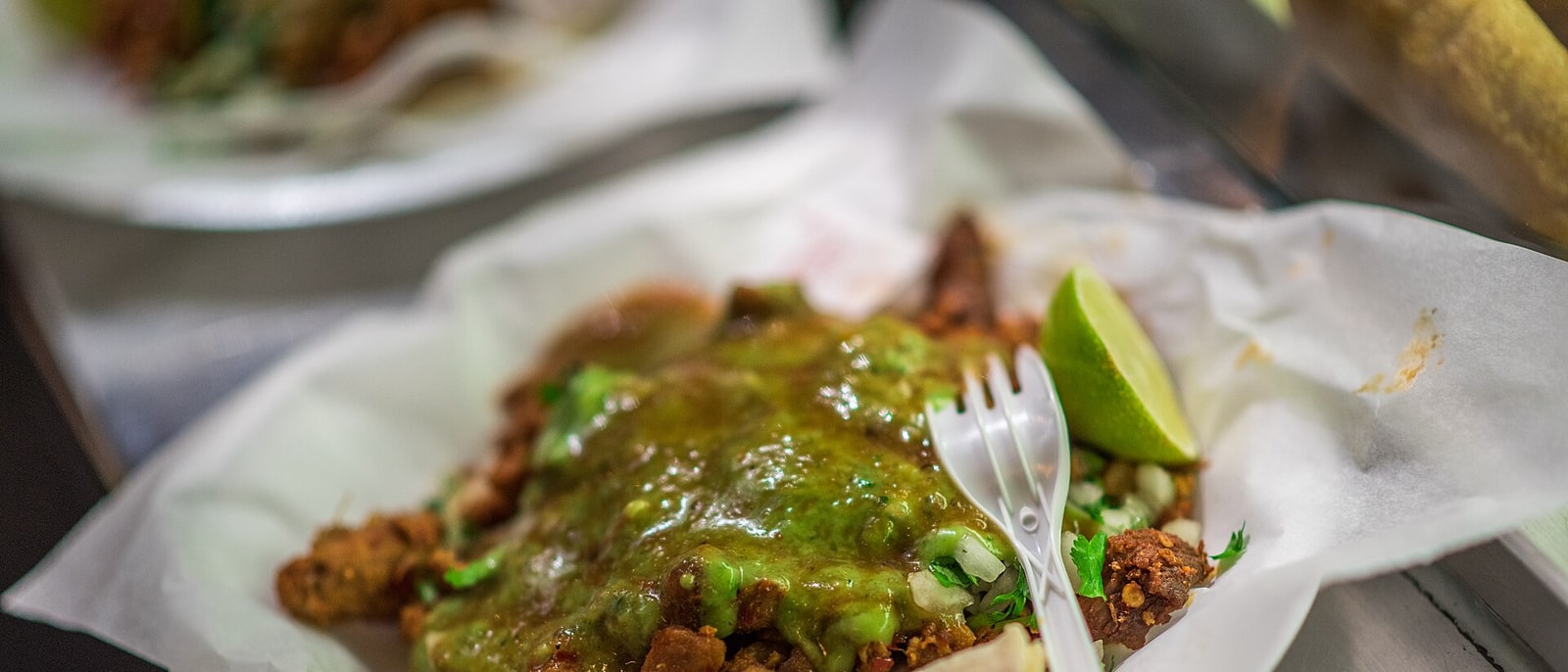
Mexico’s most famous taco was brought by Lebanese immigrants. They arrived in Puebla in the early twentieth century with shawarma, meat stacked on a vertical spit, and here the lamb became pork marinated in chilli and achiote, a pineapple went on top, and it was served in a corn tortilla. That’s al pastor, and the spinning trompo in the taquerías comes straight from it.
It’s a good summary of how Mexican cooking works: it absorbs what arrives and gives it back turned into something else that resembles nothing.
The route, stop by stop
4 STOPS- 01
Tacos, and how to order them
Al pastor is carved straight off the trompo and the taquero finishes by flicking a piece of the pineapple crowning the spit through the air to land on the tortilla. Ask for it “con todo” if you want onion and coriander. Suadero is slow-cooked beef, fattier and softer. Campechano mixes two meats. The canasta ones are something else: made in the morning, stacked hot in a lined basket and sold in the street at midday, soft and soaked by then, and among the most popular and cheapest things going. The golden rule for choosing a stall is the usual: a queue of locals and fast turnover.
- 02
Mole and chiles en nogada
Mole poblano contains several kinds of dried chilli, spices, nuts, seeds, bread, chocolate and sometimes more than thirty ingredients in all, toasted and ground separately before being combined. The chocolate doesn’t make it sweet: it brings bitterness and body. It’s served over chicken or turkey and is festival food, not everyday food.
And chiles en nogada are the perfect example of seasonal cooking: poblano chilli stuffed with meat-and-fruit picadillo, bathed in a walnut cream and crowned with pomegranate and parsley. White, green and red, like the flag.
They’re only made when fresh walnuts and pomegranates overlap, roughly July to September. Outside those months, if you’re offered one, it isn’t in season.
- 03
Mezcal and pulque
The rule that clears up the confusion: mezcal is any agave spirit, and tequila is one specific mezcal, made only from blue agave and only in certain areas. Mezcal is made from many agave varieties and the hearts are cooked in earth pits with wood, hence the smokiness.
It’s drunk slowly, in sips, never in one go and without salt or lime.
Pulque predates all of that and isn’t distilled: it’s the fermented sap of the maguey, thick, slightly sour and low in alcohol, drunk in pre-Hispanic times for ritual purposes. It nearly disappeared in the face of beer and has come back in the pulquerías downtown, sometimes “curado” with fruit.
- 04
Breakfast and the market
A big breakfast rules here: chilaquiles (corn chips bathed in green or red salsa, with cream, cheese and sometimes egg or chicken on top) huevos rancheros or divorciados, with beans. Eaten mid-morning and it holds you until evening. Neighbourhood markets have food aisles where you eat better and cheaper than in most restaurants: San Juan, Coyoacán with its tostadas, Medellín in the Roma. And you should try tlacoyos, thick oval tortillas stuffed with bean or fava, made on street griddles and pre-Hispanic in origin.
Frequently asked
What’s the difference between mezcal and tequila?
Mezcal is any agave spirit. Tequila is one specific kind of mezcal, made only from blue agave in defined areas. Mezcal uses many varieties and the hearts are cooked in wood-fired earth pits, which gives the smoky flavour. It’s sipped, without salt or lime.
When are chiles en nogada eaten?
Roughly July to September, when fresh walnuts and pomegranates overlap. It’s a strictly seasonal dish: if you find it outside those months, it isn’t made with the ingredients at their best. It carries the three flag colours deliberately.