OZU /UNITED ARAB EMIRATES /ABU DHABI /GUIDE
Abu Dhabi’s neighbourhoods
5 h route4 stopsBest: After dark, when the Corniche fills and the heat easesUpdated July 2026
Everything is far from everything here and that isn’t a flaw in the city: it’s the design. Abu Dhabi was planned from the sixties on, when oil arrived, on a grid of extremely wide avenues made for the car, at a moment when that was modern and in a climate where walking the street for half the year is unviable. The consequence is that you don’t stroll from one place to another here: you drive.
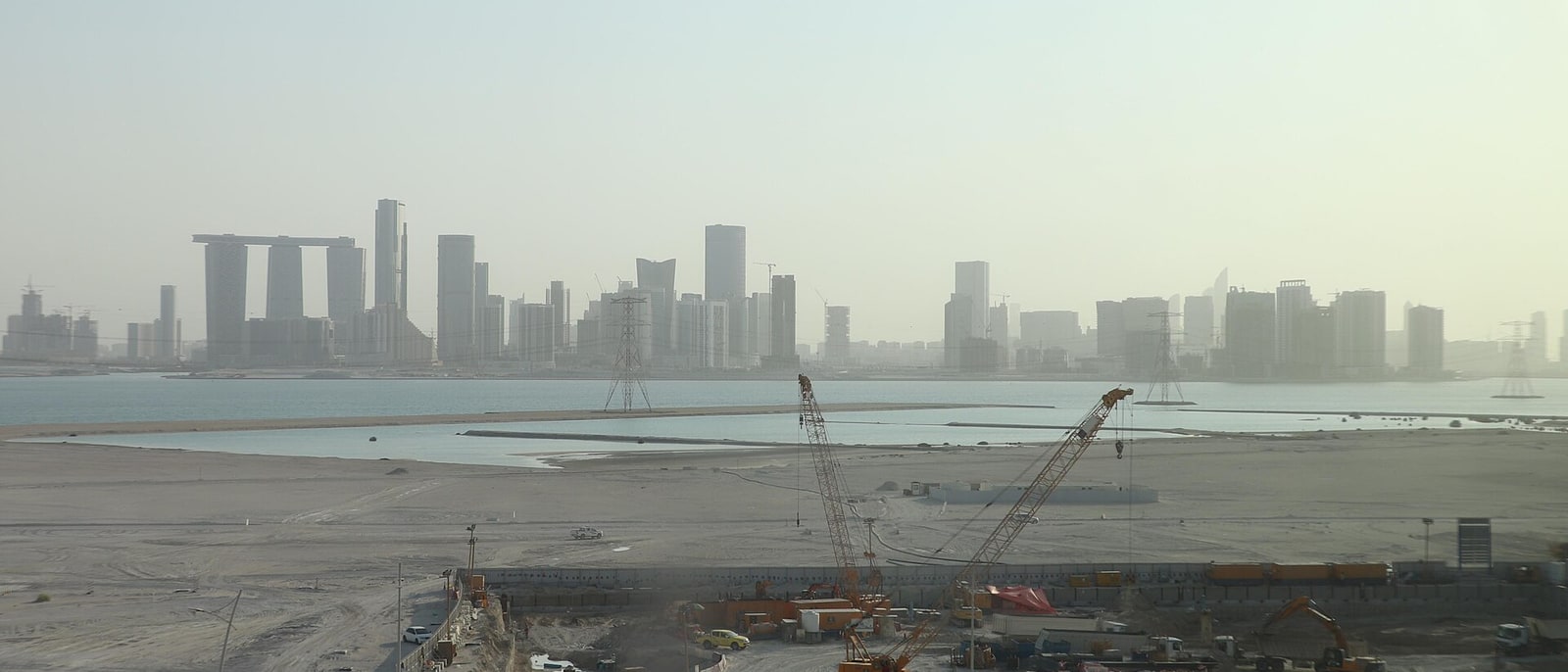
To that you add the geography, which spreads the city across islands: the centre is on one, the airport is on the mainland, the museums on another, the leisure on another, and it’s all connected by bridges and motorways. So understanding Abu Dhabi’s neighbourhoods means understanding four or five zones separated by kilometres, and accepting from the start that taxis are part of the budget. The advantage: it’s calm, it’s green and it doesn’t have the neighbour’s crowding.
The route, stop by stop
4 STOPS- 01
The central island
Central Abu Dhabi takes up an island, joined to the mainland by bridges, and the ordinary city lives there: apartment blocks from the eighties and nineties, offices, the market, the neighbourhoods where people live. The Corniche skirts its northern face with eight kilometres of promenade, lawn and public beach.
What to know is that this part is more interesting than it looks and almost nobody walks it: inland on the island, away from the water, are the neighbourhoods where most of the population lives, with their restaurants from everywhere, their shops and their street life from eight in the evening.
And in the middle of all that is Qasr Al Hosn, the eighteenth-century fort over the well, ringed by skyscrapers. That contrast, a mud tower in the middle of a sixties grid, is the city’s best image. It walks well in winter. In summer, don’t even try.
- 02
Saadiyat
An artificial island to the northeast, devoted to culture and luxury: the Louvre is here, the good beach hotels are here and so is the beach where turtles nest. It’s the most expensive and the newest zone.
And here you have to be honest: fifteen years after being announced, Saadiyat is still half done. The Louvre is there and it’s magnificent. Gehry’s Guggenheim has had over a decade of delays, Zaha Hadid’s opera house was never built and the national museum has been arriving very late.
What you’ll find is a spectacular museum, a couple of hotels and a fair amount of empty lot with fences and cranes. It’s worth it for the Louvre, no argument, but don’t come expecting a cultural quarter: come expecting an excellent museum in the middle of a building site fifteen years old. The Saadiyat beach, though, is the best in the city and hawksbill turtles genuinely nest there.
- 03
Yas
Another island, this one devoted entirely to leisure: theme parks, an enormous mall, hotels and the Formula 1 circuit, which crosses the island and passes under a hotel. It’s on the way to the airport, which makes it convenient for the last day.
It’s what it looks like and it pretends nothing else. Ferrari World has the fastest roller coaster in the world, with compulsory goggles because at that speed an insect is a serious problem. There’s a Warner park and a water park that in summer is the only way to be outdoors without dying. And the circuit, which can be visited and where the race runs at dusk to finish at night with the track lit.
If you’re travelling with children, this island can be half a reason to choose Abu Dhabi over Dubai. If not, it’s skippable with no drama at all, and that time is better spent in Al Ain.
- 04
What was promised and not built
Near the airport there’s a place worth knowing about even if you don’t visit, because it explains something about this emirate: Masdar City. It was announced in 2006 as the world’s first net-zero-emissions city, zero waste and zero cars, powered only by renewables, with fifty thousand inhabitants, and a completion date early last decade.
It didn’t happen. What’s there today is a small fragment of that: a few blocks built, a research institute, a handful of buildings with very good passive design (narrow streets oriented for shade, a modern wind tower) and far less than promised, with the targets revised down and the deadlines moved again and again.
You can visit and it’s interesting precisely for that: it’s an honest experiment in desert architecture, wrapped in a promise that wasn’t kept.
That an emirate living off oil should announce the planet’s first carbon-free city is a story worth telling in full, ending included.
Frequently asked
Where to stay in Abu Dhabi?
On the central island if you want the real city, the Corniche and the public beach at your door, at normal prices. On Saadiyat if you want a good beach and the Louvre nearby, knowing it’s the priciest and that there’s still building work around. And on Yas if you’re travelling with children or have an early flight, because it’s on the way to the airport. Budget for taxis: everything here is far from everything by design.
Can you walk around Abu Dhabi?
On the central island and the Corniche yes, and in winter it’s pleasant. In summer no, because it’s over forty degrees with humidity. But the city was planned from the sixties on a grid of extremely wide avenues made for the car, and it’s spread across islands kilometres apart, so between zones there’s no practical way to walk. Budget for taxis.